

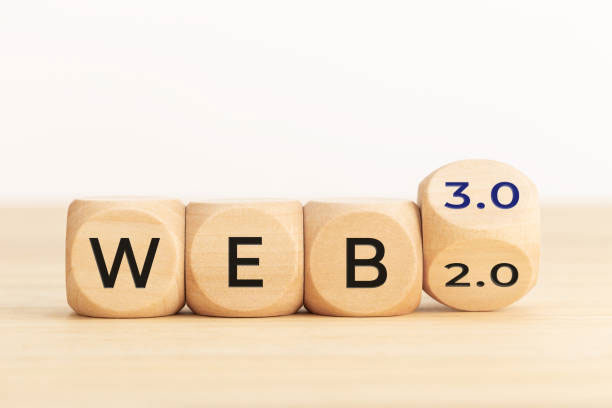

While the Web 2.0 wave is still unfolding, we are also seeing the first signs of growth emerging from the next paradigm shift in internet applications, known as Web 3.0. Five years ago, Berners-Lee coined the term «Semantic Web»"to describe a network in which machines would process content in a way similar to humans, and in which all data would be connected and understood both contextually and conceptually. We also know this concept as Web 3.0.
To delve into this world, we will try to give you a clear concept of Web 3.0 (although conceptualizing this term can be a bit difficult, because it is still in process and is the type of technological tool that is in use at the moment)
We're talking about the third generation of the internet; it will be centered on artificial intelligence This will allow for understanding data to provide more semantic results on the web; its ultimate goal is to have smarter and more open websites.
However, further development and time are needed before Web 3.0 can be fully utilized. The transition between Web 1.0 and 2.0 took a little over 10 years, although some electronic devices already use Web 3.0 technology, such as Siri, Alexa, and Google, which combine artificial intelligence and voice recognition.
First of all, the launch of any new technology will always bring benefits and drawbacks, and here you can find some of them.
Our user experience on the internet will become increasingly personalized, making internet browsing much more productive.
Companies will be able to better understand consumer needs and will only give users information that truly interests them, allowing for more targeted advertising.
Web 3.0 will have better data protection security protocols, so users can keep their own data and share what they choose.
Now, let's look at some of the disadvantages that the use of this 3.0 technology might have.
And perhaps the pros and cons are very balanced; without a doubt, it is a change that must be made to continue supplying consumer needs and not become technologically outdated.
We started with Web 1.0, where we had free access to information and the freedom to publish our opinions without any control. Then, as the population's preferences changed, the need arose to create and implement Web 2.0 technology, which stemmed from centralization, surveillance, and many intrusive advertisements. However, new technologies have gradually emerged that point more towards decentralization, such as... blockchain, Therefore, Web 3.0 will allow fully decentralized applications to prevail over centralized social networks like Facebook, giving people greater control over their own data.
We are currently using Web 1.0 and Web 2.0, but the internet needs to be upgraded to Web 3.0. This new version of the internet will focus on decentralized websites and give users more control over their data.
Although we are already using some tools and platforms that are part of Web 3.0, it has not yet been fully implemented. But with the future implementation of Web 3.0, we can expect major changes in how the internet works, giving users more control and power over their data.
To adapt your website to these new technologies, in The Cloud Group We have experts in web development Customized with the best designs to meet user requirements. Contact us for more information.