

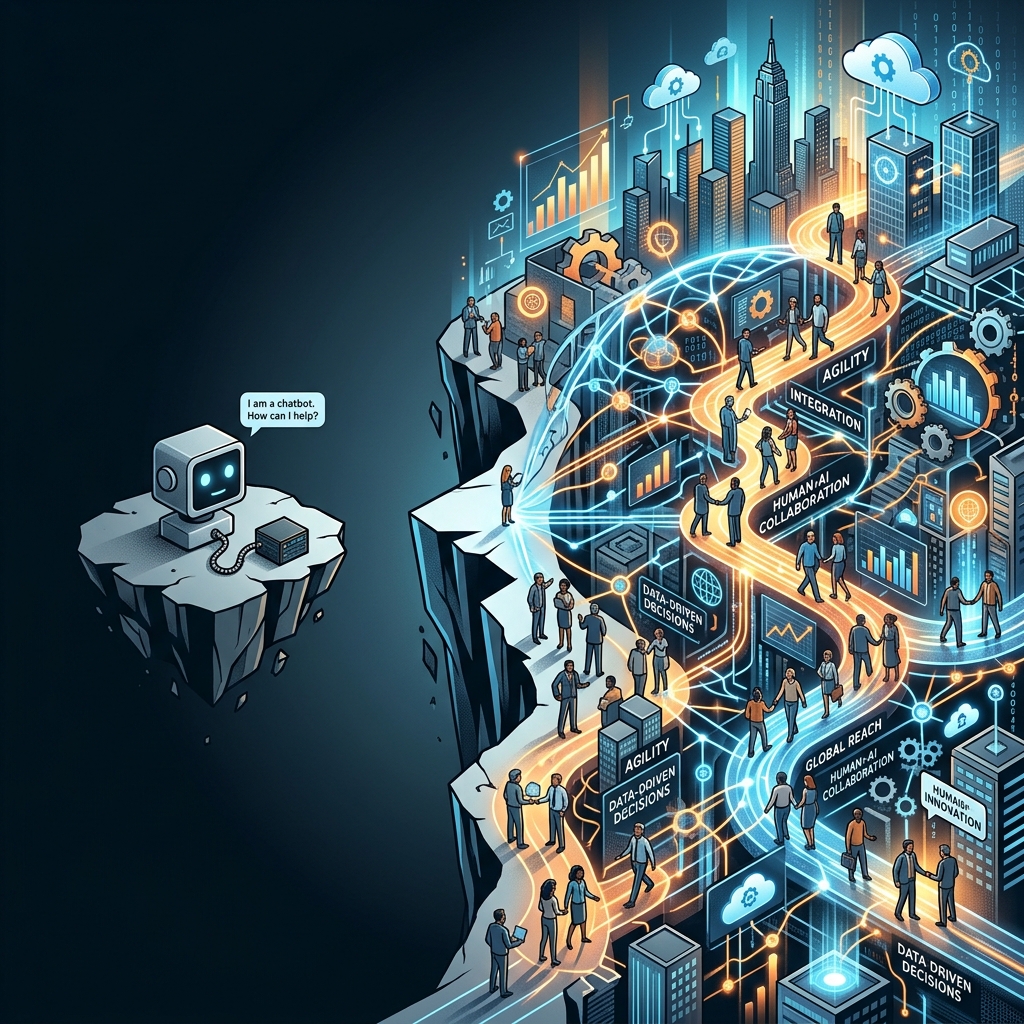


Putting a chatbot in front of a process doesn't transform the process; it just adds a new door. If behind that door there's still information scattered across four systems, rules known only to one person, and decisions made by email, the only thing that's changed is the way in.
This confusion is costly because it consumes the budget and undermines the initiative's credibility. When, six months later, someone asks what has improved, the honest answer is usually "the initial experience," and that doesn't justify a transformation program.
Layer | What it contains | Effect if played alone |
|---|---|---|
Interface | Web, app, chatbot, portal | Cosmetic: same process, different door |
Process | Decisions, those responsible, exceptions | Real, even without new technology |
Data | Source of truth, definitions, history | Enable everything else |
Architecture | Contracts, permits, traceability | Determine what can be changed next |
The natural sequence of spending is from top to bottom, because the interface layer is the visible one and the one that can be presented to a committee. The sequence that produces results is the opposite.
There is a simple check to find out which layer you are working on: Would the proposed change disrupt anyone's work if the screen were removed tomorrow? If the answer is no, the project lives in layer 1.
Transformation is not digitization. Digitization is transferring what was already being done to a tool; transformation is questioning why it was done that way.
The four changes that do constitute transformation:
Steps disappear. They don't get done faster: they cease to exist. A validation that is no longer necessary because the data is checked at the source.
The number of hands is reduced. A case that used to go through four people now goes through one, because the information needed by the other three is available at the time of the decision.
The exceptions cease to be artisanal. They are identified, classified, and have a defined path, instead of being resolved through conversation.
Information is no longer reintroduced. Each piece of data is captured only once. Any process where someone copies information from one system to another has its greatest opportunity for improvement there, and it almost never needs AI to solve it.
McKinsey confirms this from the results side: in its 2025 survey, the factor that correlates most with impact on EBIT is the deep redesign of workflows, and only 21% of the organizations that adopted generative AI had done so.
It's important to understand the incentive, because it's not irrational. A conversational assistant can be implemented in weeks, demonstrated in minutes, doesn't force anyone to change how they work, and produces an immediate feeling of modernity.
A process redesign takes months, requires discussions with departments, reveals that certain tasks do not add value, and cannot be taught in a slide.
The first is easy to approve, and the second is the one that generates the return. This mismatch explains a good part of the digital transformation budgets of recent years.
None of this makes the chatbot a bad idea. It's an excellent interface in three specific situations:
When information is scattered and the user doesn't know where to look. Here the conversation solves a real navigation problem.
When the consultation is one-off and the user is not a regular user. A customer who asks once a year isn't going to learn how to use a portal.
When there's a working system behind it. And this is the determining condition: a good interface on an orderly process multiplies its value; on a disorderly process, it multiplies frustration, as we analyzed in A bad customer service bot destroys more value than it saves
If the current plan consists of a list of tools, it should be rewritten as a process. Four steps:
With this order, the interface arrives last and correctly. With the reverse order, the interface arrives first and the transformation fails.
For any initiative presented as a digital transformation, a single question should guide the conversation: What will stop being done once this is working?
If there's a concrete response—a step, a validation, a data re-entry, a coordination email—then there's transformation. If the response is that everything will be done the same but better, then there's a new tool, which may be useful, but it's not the same thing.
Confusing the two things costs a year's budget and, worse, the credibility to ask for the next year's.
Not on its own. A conversational assistant is an interface layer: it adds a new way to enter a process, but it doesn't modify the decisions, the people responsible, the exceptions, or the data that support it. If the underlying process doesn't change, the result is merely cosmetic.
Four verifiable changes: steps disappear instead of being accelerated, the number of people involved is reduced, exceptions are no longer resolved manually, and information is no longer manually reintroduced between systems.
Digitizing is transferring what was already being done to a tool; transforming is questioning why it was done that way before transferring it. Digitizing an inefficient process produces a faster, inefficient process.
Because a chatbot can be implemented in weeks, demonstrated in minutes, and doesn't force anyone to change their way of working, while a redesign takes months, requires negotiation between departments, and reveals that certain tasks don't add value. Easy to approve and generating a return on investment are not the same thing.
When information is scattered and the user doesn't know where to look, when the query is one-off and the user isn't a regular visitor, and especially when there's an existing, functioning process behind it, a good interface on an organized process multiplies its value; on a disorganized one, it multiplies frustration.
Identifying the two or three processes that explain the margin, measuring their current state to establish a baseline, redesigning them before choosing technology, and then selecting the tools that support the redesigned process.
Is your transformation program a list of tools or a list of processes? We measure the actual state, redesign what explains your margin, and only then recommend technology. Let's talk →